When travelers ascend the lush hills of Sintra to witness the vibrant colors of the Romanticist castle on the peak, they are often captivated by the ornate ballrooms and the sweeping views from the terraces. However, to truly understand the pulse of the 19th-century Portuguese monarchy, one must look beyond the gilded reception halls. Hidden away from the formal grandeur lies the engine room of royal hospitality: the Great Kitchen. This space offers a tangible connection to the past, where the smells of roasting game and the clatter of copper pots once filled the air, orchestrating the feasts that sustained a kingdom.
Walking into this vast space feels like stepping onto a movie set that has just wrapped up filming. The preservation is impeccable, allowing visitors to visualize the bustling activity of chefs, scullery maids, and stewards. Unlike the silent, museum-like quality of some historical sites, the kitchens here retain a sense of urgency and function. It is an essential stop for anyone wanting to comprehend the logistics of luxury and the daily realities of King Ferdinand II and his family. Before you dive into the specific Palace Sections, taking a moment to appreciate the culinary heart of the estate provides a grounding perspective on royal life.
The Heart of the Palace: Where History Was Cooked
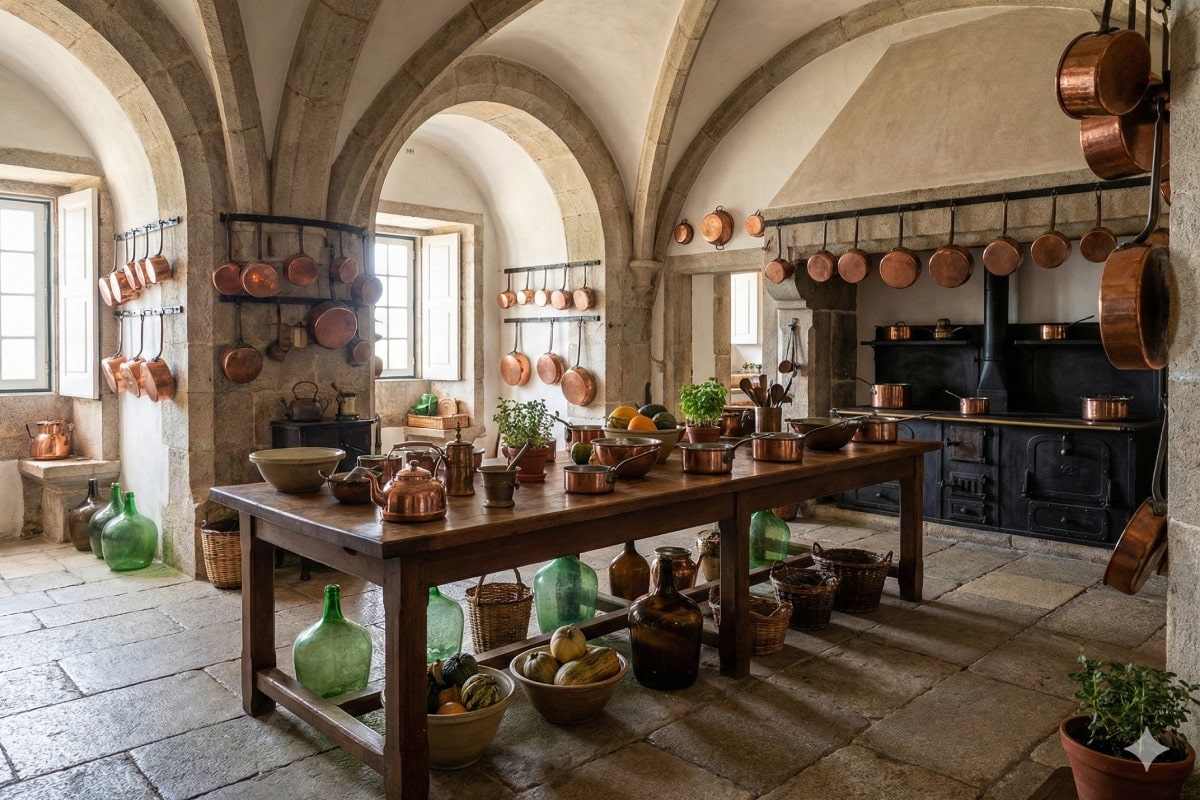
The sheer scale of the Pena Palace kitchens is the first thing that strikes a visitor. Located in the area previously occupied by the monks' refectory and kitchen of the original Hieronymite monastery, the space was significantly expanded and remodeled to meet the demands of a royal household. The high ceilings were designed not just for grandeur, but for practical ventilation, allowing the smoke and heat from multiple stoves to dissipate. The walls are lined with an impressive array of copper utensils, from massive cauldrons capable of boiling entire sides of meat to delicate molds used for intricate jellies and pastries.
Each piece of equipment tells a story of the hierarchy within the kitchen. The sheer volume of cookware suggests that the palace was prepared to host large entourages at a moment's notice. You will notice the distinct organization of the workspace, with separate areas designated for butchery, pastry making, and vegetable preparation. This division of labor was crucial in a 19th-century royal kitchen, where efficiency was paramount to ensure that multi-course meals were served promptly and at the correct temperature.
Innovations of the 19th Century
King Ferdinand II was not only a patron of the arts but also deeply engaged with modern ideas of progress, a mindset reflected even in the palace kitchens. Designed to meet the expectations of a 19th-century royal household, they were equipped with advanced cast-iron stoves that offered far greater control than earlier open hearths—essential for the refined, French-influenced cuisine popular among European royalty.
Because the kitchens were located at a distance from the Royal Dining Room to prevent cooking odors from reaching the living quarters, keeping food warm posed a logistical challenge. This was addressed through the use of copper warmers and bain-marie systems, ensuring dishes arrived at the table at the correct temperature. These solutions illustrate the close relationship between architectural planning and gastronomy within the palace.
- Cast-Iron Stoves: Allowed for multiple cooking methods simultaneously, from simmering to frying.
- Copper Batteric de Cuisine: High-quality cookware favored for its excellent heat conductivity.
- Ovens: Separate wall ovens were used specifically for baking bread and the delicate pastries Sintra is known for.
- Dumbwaiters: Mechanical lifts were employed to transport heavy trays to the upper floors, saving the staff from navigating narrow staircases with hot food.
Daily Life vs. Royal Banquets
Life in the palace oscillated between the intimate daily routines of the royal family and the grandiose requirements of state visits. The kitchen had to be adaptable enough to handle both extremes. On regular days, the menu was relatively modest, often featuring local game hunted in the surrounding Pena Park and fresh produce from the palace gardens. However, when diplomats or other European royals visited, the kitchen transformed into a high-pressure production line.
The following table illustrates the contrast between everyday dining and special occasions at the palace:
| Feature | Daily Royal Dining | State Banquets |
| Menu Structure | 3-4 courses, simple preparation | 10-12 courses, elaborate French cuisine |
| Service Style | Informal, family-oriented | Service à la Russe (courses served sequentially) |
| Staffing | Core kitchen team | Full brigade including extra hired help |
| Atmosphere | Relaxed and private | Formal, theatrical, and strictly timed |
The Logistics of Royal Service
Understanding the layout is key to appreciating the workload of the staff. The kitchen is situated on the ground floor, while the dining rooms are on the upper levels. This physical separation necessitated a rigorous system of coordination. Servants would have to carry heavy trays through corridors and up staircases, racing against the cooling of the food. It is said that the timing of the service was rehearsed to perfection, with the head chef acting as a conductor to ensure the flow of dishes remained uninterrupted.
While exploring the Visiting Information is helpful for planning your trip, seeing the physical distance between the service areas and the noble areas gives you a newfound respect for the palace staff. They were the invisible hands that maintained the illusion of effortless luxury. The scullery area, adjacent to the main kitchen, shows where the massive cleanup operations took place, a never-ending cycle of washing and polishing the copper to keep it gleaming for the next day.
Planning Your Visit to the Kitchens
The kitchen is usually one of the final stops on the interior tour of the palace, serving as a grounding finale after the sensory overload of the Manueline and Moorish influences upstairs. Because the palace can get quite crowded, especially during peak seasons, the kitchen often offers a bit more breathing room to admire the details. Take your time to look at the stamps on the copper pots and the intricate tile work that lines the walls, which was designed to be both decorative and hygienic.
To ensure you have enough time to explore every corner of the estate, including these fascinating service quarters, it is highly recommended to plan ahead. The queues for the interior tour can be long, and having your access sorted before you arrive at the gates is a smart move for any traveler.
A Lasting Impression of Royal Domesticity
Leaving the Pena Palace kitchens, you emerge back into the open air with a complete picture of the monument. It is easy to get lost in the romance of the towers and the mist of the Sintra mountains, but the kitchens remind us of the human element behind the stone facade. It was here that the fuel for the monarchy was prepared, where traditions were upheld, and where the changing tides of technology were embraced.
Whether you are a food history enthusiast or simply a curious traveler, the kitchens provide a unique lens through which to view the 19th century. They stand as a testament to the complexity of running a royal household and offer a quiet, metallic beauty that contrasts perfectly with the colorful exterior of the palace.