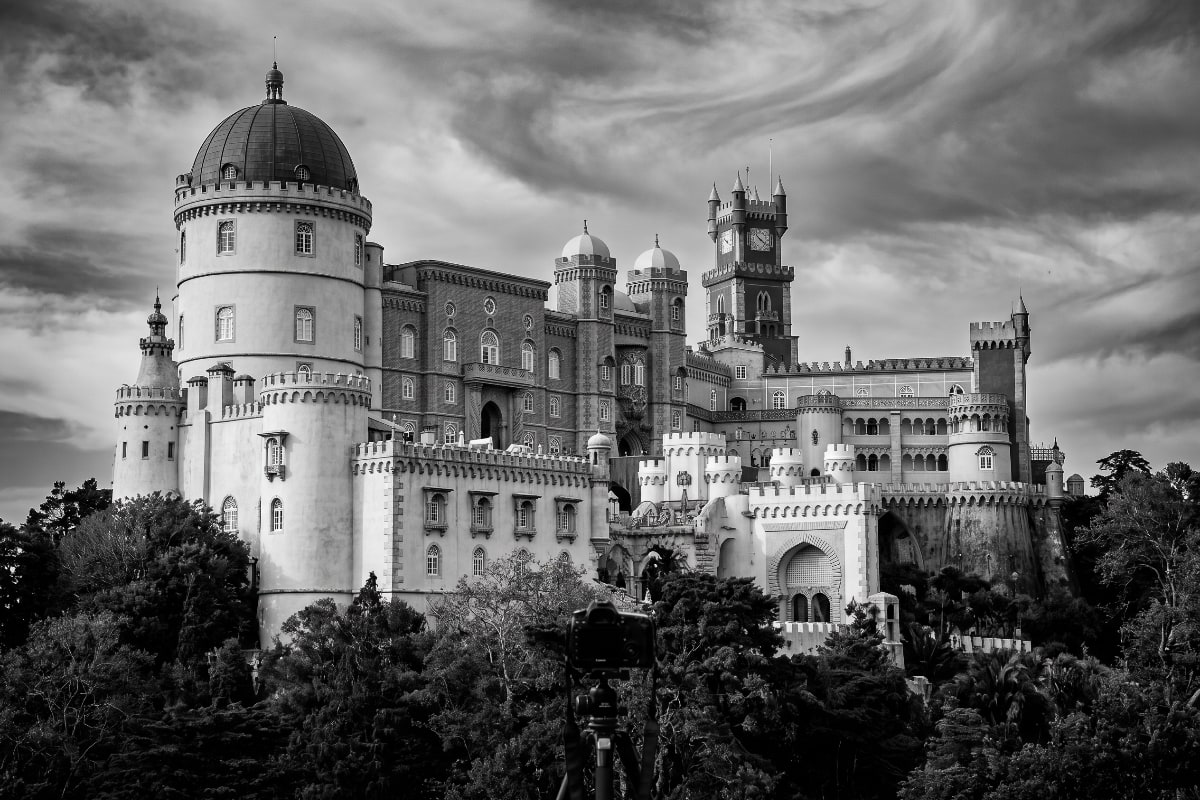
Pena Palace, perched atop the Sintra Mountains in Portugal, is a kaleidoscope of color and architectural styles. But have you ever considered capturing its essence in black and white? Stripping away the vibrant hues allows you to focus on the palace's dramatic form, intricate details, and the play of light and shadow, revealing a timeless beauty often overlooked. This guide will walk you through the techniques and considerations for creating compelling black and white photographs of Pena Palace, turning a visual feast into a study of form and emotion.
Why Black and White?
Black and white photography transcends mere documentation; it's an artistic interpretation. It allows you to:
- Emphasize Form and Texture: Without color distractions, the eye is drawn to the palace's architectural details, the rough texture of the stone, and the smooth surfaces of the tiles.
- Create Drama and Mood: Contrast becomes a powerful tool, allowing you to sculpt the scene with light and shadow, evoking a sense of mystery and grandeur.
- Focus on Composition: Black and white simplifies the scene, forcing you to pay closer attention to lines, shapes, and the overall arrangement of elements within the frame.
- Highlight Historical Significance: The absence of color can lend a timeless quality to your images, emphasizing the palace's rich history and enduring legacy.
Essential Techniques for Black and White Photography at Pena Palace
1. Mastering Contrast
Contrast is the key ingredient in compelling black and white images. It's the difference between the lightest and darkest tones in your photograph. At Pena Palace, you can exploit the following:
- Time of Day: Midday sun creates harsh shadows and high contrast, while early morning or late afternoon light provides softer, more gradual transitions. Experiment with both to see which mood you prefer.
- Architectural Elements: Look for areas where light and shadow interact dramatically, such as archways, towers, and ornate carvings.
- Post-Processing: Use editing software to fine-tune the contrast, bringing out details in the highlights and shadows.
Pro Tip: When shooting in bright sunlight, consider using a graduated neutral density filter to darken the sky and balance the exposure with the foreground. This will prevent blown-out highlights and preserve detail in both areas.
2. Utilizing Texture
Pena Palace is a treasure trove of textures, from the rough-hewn stone of the original monastery to the intricate tilework of the later additions. Black and white photography allows you to accentuate these textures, adding depth and visual interest to your images. Consider the different Palace Sections to find the textures that appeal to you the most.
- Close-Up Shots: Focus on the details – the cracks in the stone, the patterns in the tiles, the texture of the wood.
- Side Lighting: Position yourself so that the light is coming from the side, raking across the surface and highlighting its texture.
- Sharp Focus: Ensure your images are sharp to capture every detail.
Shooting Scenario: Imagine capturing the texture of the Triton statue under soft, diffused light. Using a wide aperture (e.g., f/2.8 or f/4) will create a shallow depth of field, blurring the background and further emphasizing the statue's intricate details.
3. Compositional Considerations
Composition is crucial in any photograph, but it's especially important in black and white, where you don't have color to rely on. Here are some tips for composing compelling black and white images of Pena Palace:
- Rule of Thirds: Divide your frame into nine equal parts with two horizontal and two vertical lines. Place key elements of the scene along these lines or at their intersections.
- Leading Lines: Use lines, such as pathways, walls, or architectural features, to lead the viewer's eye through the image.
- Framing: Use elements within the scene, such as archways or windows, to frame your subject and draw attention to it.
- Symmetry and Patterns: Pena Palace is full of symmetrical elements and repeating patterns. Use these to create visually appealing compositions.
Practical Tip: Experiment with different perspectives. Try shooting from a low angle to emphasize the height and grandeur of the palace, or from a high angle to capture the surrounding landscape.
4. Gear Recommendations
You don't need expensive equipment to take great black and white photos of Pena Palace. However, the following gear can be helpful:
- Camera: Any camera that allows you to shoot in RAW format will do. RAW files contain more information than JPEGs, giving you more flexibility in post-processing.
- Lenses: A wide-angle lens is useful for capturing the grandeur of the palace, while a telephoto lens can be used to isolate details.
- Tripod: A tripod is essential for shooting in low light or for capturing sharp images with long exposures.
- Filters (Optional): Polarizing filters can reduce glare and increase contrast, while neutral density (ND) filters can allow you to use slower shutter speeds in bright light.
Lens Recommendation: A versatile zoom lens like a 24-70mm or 24-105mm can be a great choice, allowing you to capture both wide-angle views and close-up details without constantly changing lenses.
5. Post-Processing Workflow
Post-processing is an integral part of black and white photography. Software like Adobe Lightroom or Capture One allows you to:
- Convert to Black and White: Experiment with different conversion methods to find the one that best suits your vision.
- Adjust Contrast and Tones: Fine-tune the contrast, highlights, shadows, whites, and blacks to create the desired mood.
- Dodge and Burn: Selectively lighten or darken areas of the image to draw attention to specific details.
- Sharpen: Sharpen your images to bring out fine details.
Editing Tip: Pay attention to the histogram. Aim for a balanced histogram with detail in both the highlights and shadows. Avoid clipping, which occurs when the histogram is pushed too far to the left or right, resulting in lost detail.
Planning Your Visit
To maximize your photographic opportunities, consider these tips when Visiting Information for Pena Palace:
- Timing: Arrive early in the morning or late in the afternoon to avoid crowds and take advantage of the soft light.
- Weather: Overcast days can be ideal for black and white photography, as they provide even lighting and reduce harsh shadows.
- Tickets: Purchase your Tickets in advance to avoid long queues.
- Explore: Take your time to explore the palace and its grounds, looking for interesting angles and compositions.
Inspiration and Examples
Before your visit, research black and white photography of Pena Palace to gain inspiration. Pay attention to how other photographers have used contrast, texture, and composition to capture its beauty. Look for images that resonate with you and try to understand what makes them effective.
Beyond the Palace: Black and White Photography in Sintra
While Pena Palace is the star attraction, Sintra offers many other opportunities for black and white photography. Explore the Quinta da Regaleira with its mysterious wells and grottoes, the Moorish Castle with its panoramic views, and the charming streets of Sintra village. Each location provides unique subjects and challenges for the black and white photographer.
Final Thoughts
Black and white photography is a powerful tool for capturing the essence of Pena Palace. By mastering contrast, texture, and composition, you can create dramatic and evocative images that highlight its architectural grandeur and historical significance. So, grab your camera, embrace the challenge, and discover the timeless beauty of Pena Palace in black and white.