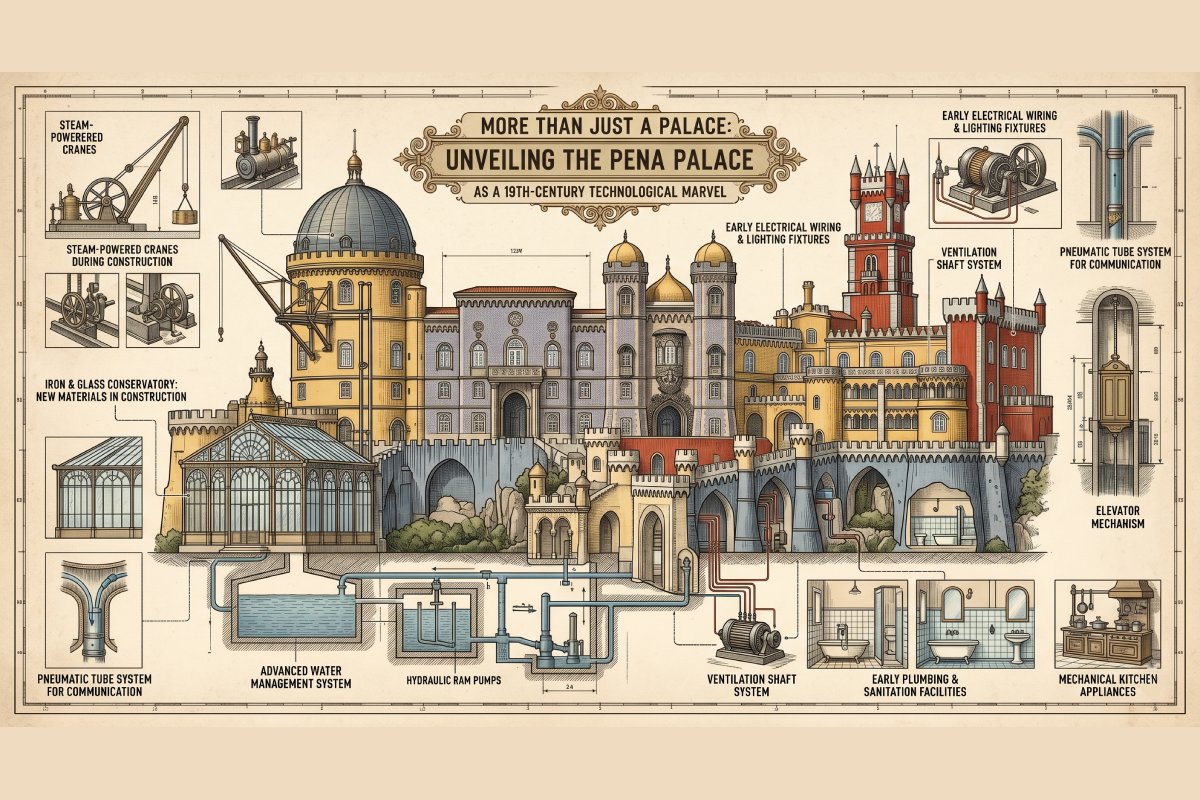
Pena Palace, perched atop the Sintra Mountains in Portugal, is renowned for its Romanticist architecture, vibrant colors, and breathtaking views. But beyond its visual splendor lies a hidden story – a tale of 19th-century innovation and engineering that transformed a former monastery into a modern royal residence. This isn't just a palace; it's a testament to King Ferdinand II's forward-thinking vision and the era's burgeoning technological advancements. To fully appreciate Pena Palace, one must delve into the ingenuity that made royal life there not only luxurious but also surprisingly modern for its time.
A Brief History: Originally a Hieronymite monastery dating back to the Middle Ages, Pena Palace was acquired by King Ferdinand II in the 19th century. He envisioned transforming the ruins into a Romanticist masterpiece, a vision brought to life by architect Baron Wilhelm Ludwig von Eschwege. The palace stands as a symbol of Portugal's Romantic era, blending various architectural styles, including Gothic, Manueline, and Moorish influences.
Architectural Highlights: The palace's exterior is a riot of color and texture, featuring crenellated towers, decorative battlements, and whimsical statues. The interior is equally impressive, with opulent rooms adorned with intricate carvings, frescoes, and period furnishings. Consider adding an image of the palace exterior here.
A Glimpse into Royal Innovation
While the exterior of Pena Palace evokes a sense of fairytale romance, the interior reveals a commitment to integrating cutting-edge technology. King Ferdinand II was determined to create a comfortable and functional home for his family, embracing the latest advancements to enhance their daily lives. He didn't just want a beautiful palace; he wanted a technologically advanced one.
Water Management: A Feat of Engineering
One of the most impressive feats of engineering at Pena Palace is its sophisticated water management system. Given its mountaintop location, ensuring a reliable water supply was a significant challenge. The solution? An intricate network of underground cisterns and pipes that collected rainwater and spring water, providing a constant source of fresh water for the palace and its gardens. This system wasn't just about convenience; it was a necessity for maintaining the lush landscaping that surrounds the palace, creating the idyllic oasis we see today. Consider adding an image of the water cisterns or a diagram of the water system here.
- Rainwater Harvesting: Large cisterns strategically placed throughout the palace grounds collected rainwater.
- Natural Springs: Water from nearby natural springs was channeled into the palace using gravity-fed pipes.
- Filtration System: A basic filtration system ensured the water was clean and potable.
Embracing Electricity: A Palace Ahead of Its Time
Pena Palace was among the first royal residences in Portugal to embrace electricity. King Ferdinand II recognized the potential of this new technology and incorporated it into the palace's design. While not as pervasive as modern electrical systems, the early use of electricity at Pena Palace provided lighting in key areas, showcasing the King's commitment to innovation and modernity. Imagine the novelty and wonder of electric lights in a 19th-century palace! Consider adding an image of the early electrical fixtures here.
Heating and Ventilation: Comfort Redefined
Maintaining a comfortable temperature within the palace walls was another challenge, given the Sintra Mountains' often-damp climate. To address this, Pena Palace incorporated innovative heating and ventilation systems. Fireplaces were strategically placed throughout the palace, providing warmth during the colder months. Furthermore, the palace's design incorporated natural ventilation principles, allowing for airflow that helped regulate temperature and prevent dampness. These systems, though rudimentary by today's standards, were remarkably effective in creating a comfortable living environment.
Seamless Integration: Technology Meets Romanticism
What's truly remarkable about the technological innovations at Pena Palace is how seamlessly they were integrated into the palace's Romantic design. King Ferdinand II didn't want technology to detract from the palace's aesthetic appeal; he wanted it to enhance the overall experience. The result is a harmonious blend of form and function, where modern conveniences are hidden behind ornate facades and within the palace's intricate details. This careful integration is a testament to the King's artistic vision and the skill of the architects and engineers who brought his ideas to life. To explore the different areas of the palace, be sure to check out the Palace Sections page for an overview.
Planning Your Visit: A Journey Through Time
Visiting Pena Palace is like stepping back in time, but with the added appreciation for the technological marvels that lie beneath the surface. As you explore the palace's opulent rooms and wander through its enchanting gardens, take a moment to consider the ingenuity and foresight that went into its creation. To make the most of your visit, it's recommended to book your tickets in advance, especially during peak season. This will save you time and ensure you don't miss out on this unforgettable experience.
Before visiting, make sure to check the Visiting Information page for opening hours, accessibility details, and any current guidelines or restrictions. Understanding these details will help you plan a smooth and enjoyable visit.
Beyond the Walls: The Legacy of Innovation
The technological innovations at Pena Palace were not merely isolated achievements; they reflected a broader trend of progress and innovation that was sweeping through Europe in the 19th century. King Ferdinand II's embrace of these advancements demonstrated his commitment to progress and his desire to create a modern, comfortable home for his family. The legacy of Pena Palace extends beyond its architectural beauty; it serves as a reminder of the power of innovation and the importance of embracing new technologies to improve our lives. The palace stands as a testament to the vision of a king who dared to blend the romance of the past with the possibilities of the future.