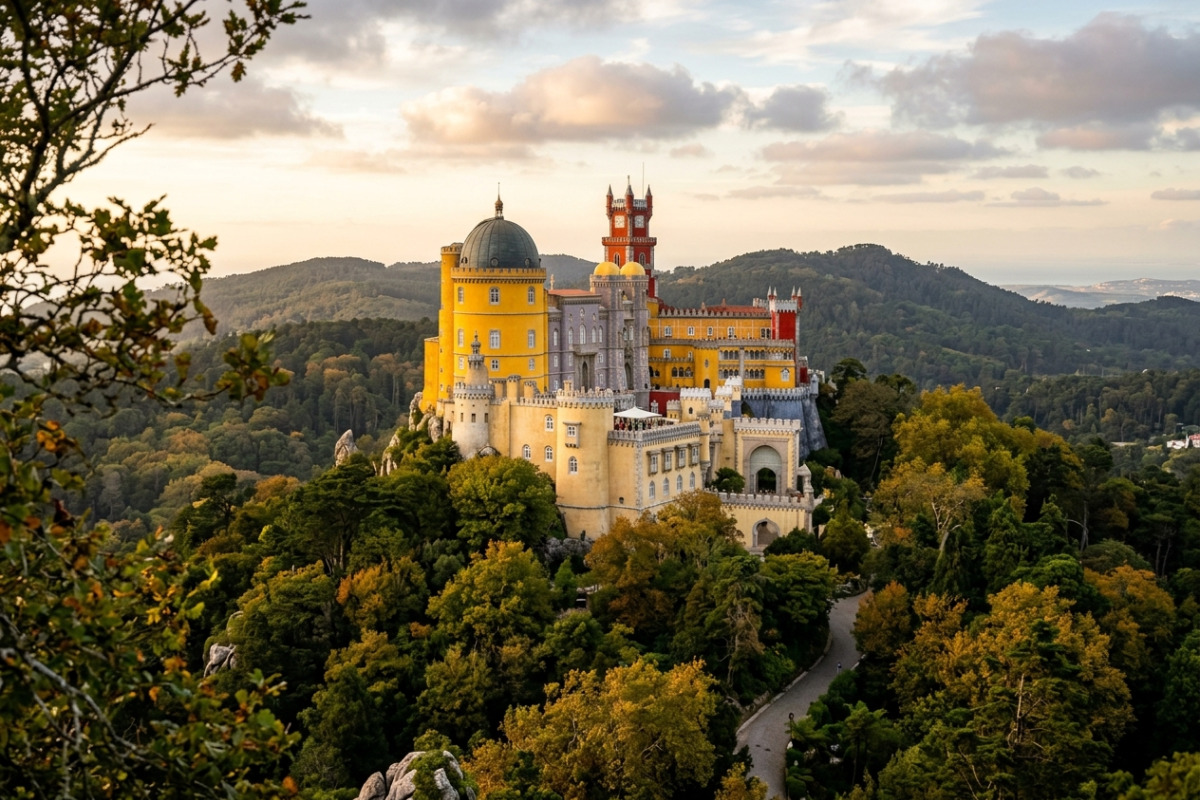
Perched atop the Sintra hills, a kaleidoscope of crimson, ochre, and cobalt blue turrets pierces the sky, a sight so fantastical it seems plucked from the pages of a fairytale. This is Pena Palace, a breathtaking monument not to royal power, but to the unbridled imagination of one man: King Ferdinand II. To truly understand this architectural marvel is to understand the soul of its creator, a monarch who was, at his core, a passionate artist.
The Making of the 'Artist-King'
Long before he became the king consort of Portugal, Ferdinand of Saxe-Coburg and Gotha was a prince immersed in culture. Raised in the intellectual and artistic circles of 19th-century Europe, his education was rich in the arts, music, botany, and literature. This upbringing instilled in him a deep appreciation for beauty and a creative spirit that would define his life's work. When he married Queen Maria II and arrived in Portugal in 1836, he was immediately captivated by the mystical allure of Sintra, a landscape that seemed to echo the Romantic ideals he cherished.
A Canvas in the Clouds
It was in Sintra that Ferdinand discovered the ruins of the 16th-century Monastery of Our Lady of Pena, which had been severely damaged by the great earthquake of 1755. Where others saw decay, Ferdinand saw potential. He acquired the monastery and the surrounding lands, not with the intention of building a conventional royal residence, but of creating a personal, artistic sanctuary. This ruined monastery on a hill would become the canvas for his most ambitious and personal project, a palace that would be an opera in stone and color.
A Romanticist Dream Forged in Stone
Pena Palace is the ultimate expression of 19th-century Romanticism, an artistic and intellectual movement that championed emotion over reason, nature over industry, and the past over the present. Ferdinand was a true Romantic. He wasn't interested in the rigid, symmetrical styles of Neoclassicism that dominated the era. Instead, he envisioned a palace that was eclectic, surprising, and deeply personal, a structure that told a story of history, fantasy, and nature intertwined.
The Visionary and the Architect
To bring this elaborate vision to life, Ferdinand collaborated with the German mineralogist and amateur architect Baron Wilhelm Ludwig von Eschwege. However, this was no ordinary commission. Ferdinand was not a distant patron; he was the project's artistic director. He provided sketches, debated designs, and insisted on a fusion of styles that would have been unthinkable to a traditional architect. Together, they embarked on a creative journey, transforming the monastic ruins into a palace that defied all architectural conventions.
Deciphering the Architectural Language of Pena Palace
Walking through Pena Palace is like taking a journey through different eras and cultures, all filtered through Ferdinand's Romantic lens. The building's design is a deliberate and theatrical mix of historical styles, each chosen for its evocative power. Exploring the different palace sections reveals this incredible diversity firsthand. The result is a 'Gesamtkunstwerk' or 'total work of art,' where every element contributes to a unified, fantastical whole.
The palace's eclectic nature can be broken down into several key influences:
- Neo-Gothic: The imposing watchtowers, battlements, and pointed arches evoke a romanticized vision of medieval castles and the age of chivalry.
- Neo-Manueline: This style is a tribute to Portugal's golden Age of Discovery. Look for intricate carvings of maritime ropes, coral, and armillary spheres, most famously embodied in the magnificent Triton Arch.
- Neo-Islamic: The influence of Moorish architecture, with its geometric tilework and horseshoe arches, pays homage to the Iberian Peninsula's rich cultural history.
- Neo-Renaissance: Elements of classical design can be seen in certain decorative features, reflecting Ferdinand’s broad artistic education.
To better understand this fusion, consider the inspirations behind each style:
| Architectural Style | Key Features | Ferdinand's Inspiration |
| Neo-Gothic | Pointed arches, turrets, spires | A romanticized view of the medieval chivalric past. |
| Neo-Manueline | Maritime motifs, armillary spheres | A tribute to Portugal's Golden Age of Discoveries. |
| Neo-Islamic (Moorish) | Intricate tilework, horseshoe arches | The rich Moorish heritage of the Iberian Peninsula. |
More Than a Building: A Total Work of Art
Ferdinand's artistic vision extended far beyond the palace's walls. The interiors were meticulously curated to reflect his tastes as a collector, filled with exquisite furniture, stained glass, and art objects from his travels. The palace was designed to be lived in and experienced, a summer residence where every room offered a new discovery.
The Pena Park: Nature as a Romantic Canvas
Just as important as the palace itself is the surrounding Pena Park. Ferdinand transformed the landscape into a sprawling Romantic garden. He ordered the planting of thousands of trees and exotic plants from every continent, creating a labyrinth of winding paths, hidden benches, and stunning viewpoints like the High Cross. The park was designed to be a place of contemplation and wonder, where one could feel a profound connection with nature, a core tenet of the Romantic spirit.
Experiencing Ferdinand's Vision Today
Visiting Pena Palace is more than just a tour of a historic building; it's an invitation into the mind of King Ferdinand II. As you wander through its vibrant courtyards and gaze out from its whimsical terraces, you are experiencing the world as he saw it; a place of beauty, history, and boundless imagination. To truly appreciate his legacy, take the time to notice the small details: the monstrous face of the Triton, the delicate tile patterns, the way a window frames a perfect view of the landscape.
To witness this masterpiece for yourself, planning your visit in advance is highly recommended, as the palace is one of Portugal's most beloved landmarks. Securing your entry allows you to step directly into Ferdinand's dream world without delay.
You can easily purchase your Pena Palace tickets online to ensure a smooth experience. For more practical details on opening hours and getting there, the visiting information page offers a wealth of helpful tips.
Ultimately, Pena Palace stands as a timeless monument to its creator. King Ferdinand II was not a conqueror or a political strategist; he was an artist who wielded stone, color, and nature as his medium. He left Portugal not with a fortress of power, but with a breathtaking poem in architectural form, a lasting tribute to the power of a single, extraordinary vision.